- Acne 101
Adult Female Acne
An embarrassing problem for adult women
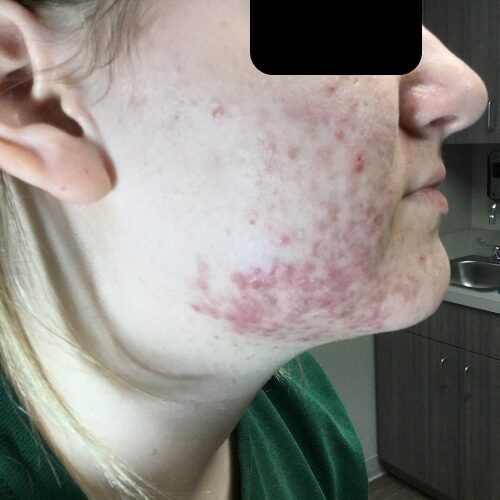
Acne in your 20s, 30s and 40s, often along the chin and jaw line. Here is what causes it and how we treat it.

What is Adult Female Acne
Adult female acne refers to women in their 20s, 30s and 40s who experience acne, often in a ‘hormonal’ distribution around the chin and jaw line. Many of these women had acne as a teenager with persistence into the adult years, while others never had acne as a teenager and then inexplicably develop acne as an adult. So often, we encounter women that are baffled as to why they have acne at the age of 40 but cannot remember having acne when they were younger. Many of these women report flaring of acne around their menstrual cycle.
Many of these women are embarrassed, perplexed, and frustrated. Many seek camouflage and cosmetics to cover up their acne.
A recent survey of a thousand women reported the following estimates of adult female acne:
Ages 20 to 29
Ages 30 to 39
Ages 40 to 49
50 years and older
What causes Adult Female Acne?
The two main underlying causes for adult female acne are genetics (i.e., family history) and hormones. Most women with adult female acne have normal circulating levels of hormones when tested. Those women with an implantable birth control, or IUD containing progestin only contraceptives, are more prone to adult female acne.
It is important to screen women with adult female acne for signs of abnormal hormone levels. This would include irregular menstrual cycles, excessive hair growth on the chest/abdomen/sides of the face, acanthosis nigricans, and female pattern hair loss.
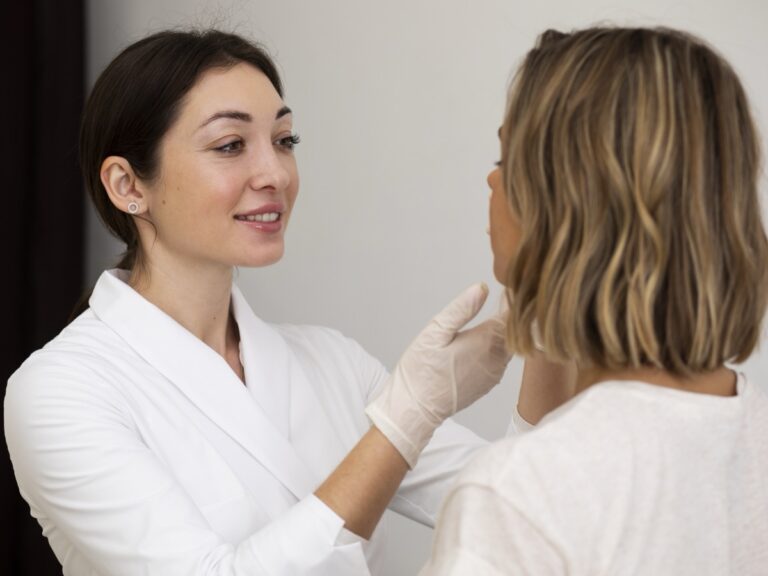
Treatment of Adult Female Acne
In general, a gentle skin care regimen, with gentle nonmedicated skin cleansers and moisturizers that do not clog pores are recommended. (See the questions and answers page of this website for further information on gentle cleansers and moisturizers.)
Unfortunately, there are limited studies that specifically look at the adult female acne population. Therefore, acne therapy is individually tailored to the needs of each patient, based on experience.
For those women with garden-variety comodonal and inflammatory acne, we will often proceed with traditional therapies. For those women who have late onset type acne with distribution around the chin and jaw line, there will be a greater focus on treating the hormonal component.
Topical Therapies
- Benzoyl peroxide
- Retinoids (adapalene, tretinoin etc.)
- Topical antibiotics: clindamycin, sulfacetamide, minocycline
- Dapsone
- Winlevi™
- Azaleic acid (good for skin of color)
- Acne DS Clarifying gel™ combines specialized formulations of topical spironolactone with dapsone (found exclusively at Acne Center of Michigan™)
Oral Therapies
- Antibiotics (Seysera™, Minocycline XR, Doxycycline)
- Oral contraceptive pills (for those women who also desire contraception)
- Spironolactone (with or without OCP)
- Isotretinoin (Accutane)™
References
Collier CN, Harper JC, Cafardi JA, et al. The prevalence of acne in adults 20 years and older. J Am Acad Dermatol. 2008;58:56-59.
Status Report From the American Acne & Rosacea Society on Medical Management of Acne in Adult Women, Parts 1, 2 and 3: Cutis. 2015 October, November, and December.
Frequently asked questions
What is adult female acne?
Adult female acne refers to women in their 20s, 30s, and 40s who break out, often in a hormonal pattern around the chin and jaw line. Some had acne as teenagers, while others develop it for the first time as adults.
What causes adult female acne?
The two main causes are genetics and hormones. Most affected women have normal circulating hormone levels when tested, and progestin-only IUDs or implants can make some women more prone to it.
How common is adult female acne?
A survey of a thousand women estimated that about 51 percent of those aged 20 to 29 are affected, along with 35 percent aged 30 to 39, 26 percent aged 40 to 49, and 15 percent of those 50 and older.
When should hormone levels be checked?
We screen for signs of abnormal hormones such as irregular menstrual cycles, excess hair growth on the chest, abdomen, or sides of the face, acanthosis nigricans, and female pattern hair loss.
How is adult female acne treated?
Treatment starts with a gentle, non-comedogenic skincare routine and is tailored to each patient. Because the cause is often hormonal, options such as oral spironolactone are frequently effective for adult women.
Explore other Acne 101 topics


Patient testimonials

4.9
Based on Google reviews
HOUR Detroit Top Doc
Recognized dermatologist

- HOUR Detroit Magazine's Top Docs
About Craig Singer MD Dermatology
Located in Bingham Farms, Acne Center Of Michigan was founded by Dr. Craig Singer, a board-certified dermatologist.
We specialize in the treatment of acne and acne scarring, offering numerous therapeutic options tailored to each patient’s needs.
Dr. Singer experienced significant acne when he was in college and has personal experience with his teenage children’s acne as well. He has helped thousands of patients look their best.
Acne Center of Michigan offers the most advanced acne treatments, drawing from both traditional and alternative approaches. Dermatologists across the region refer their most complex acne-scar cases to Dr. Singer, and patients travel from across Michigan, neighboring states, and Canada for his care.

Board-Certified
Dermatologist
Thousands of patients
Helped look their best