

Silicone Injections
Silicone Microdroplet Injections for Acne Scars
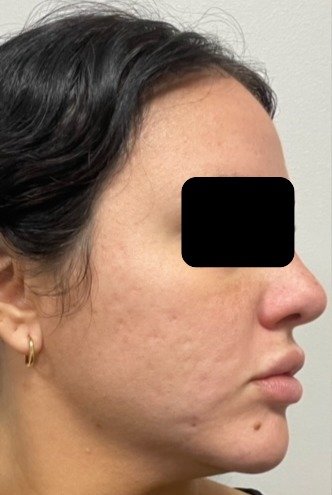
Silicone Microdroplet Injections for Acne Scars
Long-Lasting Correction for Select Depressed Scars
Highly purified liquid injectable silicone (LIS) can be used in carefully selected patients to improve depressed acne scars by stimulating the body’s own collagen production. When injected using a microdroplet serial-puncture technique, silicone acts as a scaffold for gradual soft-tissue rebuilding rather than a temporary filler.
This is a specialized acne scar treatment reserved for appropriate candidates and performed conservatively over multiple sessions.
A recently published study (Highly Purified Microdroplet Liquid Injectable Silicone for the Treatment of Acne Scars in Lighter and Darker Skin Types (Salame & Brody, Dermatol Surg 2023) demonstrated the safety and effectiveness of micro drop with silicone for the treatment of distensible acne scars.
What Are Silicone Microdroplet Injections?
Silicone microdroplet injections use medical-grade, highly purified liquid silicone placed in microscopic amounts beneath depressed scars. Unlike hyaluronic acid fillers, silicone is not absorbed. Instead, it is inert, remains stable, and stimulates controlled collagen formation around each droplet.
In our clinic, we used silicone injections only for acne scarring. We do not use it for any other indication, nor do we use it in the lips.
Silicone injections are not designed for instant volume replacement and are not appropriate for all scar types.
How Silicone Works for Acne Scarring
Silicone is injected beneath individual scars using a very fine needle. Because silicone is chemically inert, it remains unchanged in the tissue.
Over the following weeks to months:
Fibroblasts produce new collagen around each microdroplet
Collagen production stops once encapsulation occurs
Repeated treatments gradually elevate depressed scars
Temporary swelling may occur immediately after treatment, but true improvement develops slowly and progressively, which is intentional and safer.
Who Is a Good Candidate?
Silicone microdroplet injections may be considered for patients with:
Well-defined depressed acne scars
Stable skin without active inflammation
Realistic expectations
Willingness to undergo staged treatment
Silicone is not appropriate for: fillers:
Broad rolling scars without tethering release
Raised (hypertrophic or keloid) scars
Patients seeking immediate dramatic correction
A detailed acne scar evaluation is essential before treatment.
Number of Treatments and Timing
Silicone acne scar correction is progressive.
Sessions are spaced 8 weeks apart
Multiple treatments are typically required–typically three sessions total
As correction improves, sessions are spaced 3–6 months apart
Maintenance may be considered 6–12 months later for ongoing volume loss
Spacing treatments appropriately is critical to avoid overcorrection.
Recovery and Downtime
Most patients experience:
Mild discomfort during injections
Temporary swelling or redness (hours to days)
Occasional bruising lasting up to 7–10 days
Patients usually return to normal activities the same day. Makeup can typically be used shortly after treatment.
Safety and Risks of Silicone Injections
When performed properly using pure medical-grade silicone and a microdroplet technique, complications are uncommon, but possible.
Potential Side Effects
Temporary swelling or redness (hours to days)
Bruising
Mild tenderness
Less Common Risks
Overcorrection or surface irregularities
Firmness in treated areas
Bluish discoloration, redness or dyschromia
Rare inflammatory reactions
These risks are minimized through conservative dosing, proper technique, and appropriate patient selection.
Is Liquid Silicone Safe?
Concerns about silicone largely stem from historical misuse, including:
Large-volume injections
Impure or adulterated products
Improper injection techniques
Medical-grade liquid silicone has been used in medicine for decades. In 1998, an independent National Science Panel found no evidence linking silicone to systemic disease.
In December 1998, a specially appointed National Science Panel (composed of four eminent scientists from the disciplines of immunology, epidemiology, toxicology and rheumatology) reported its unanimous conclusion that there was no evidence linking silicone in breast implants to any systemic disease. The Panel’s report was based on a year-long analysis of the most rigorously tested and relevant scientific information available.
Is Silicone Injection Legal in the United States?
Yes. Liquid injectable silicone is FDA-approved as a medical device. U.S. law allows licensed physicians to use legally marketed devices within a legitimate physician-patient relationship.
Silicone Combined With Other Acne Scar Treatments
Silicone injections are frequently combined with:
Subcision
TCA CROSS
Punch excision
Ablative laser resurfacing
Microneedling
Chemical peels
Combination treatment often produces superior results compared to any single modality.
Frequently Asked Questions
A: They are best for select depressed (atrophic) scars, including certain well-defined acne scars and some chickenpox scars. They are not used for raised (keloid/hypertrophic) scars.
A: Temporary fillers provide immediate volume but are absorbed over time. Silicone
microdroplets are placed conservatively in staged sessions and can create long-lasting correction by stimulating collagen formation around each droplet.
A: Most patients need multiple sessions. Early treatments are often spaced about one month
apart, and later sessions are spaced farther apart (commonly 3–6 months) to evaluate collagen
formation and reduce the risk of overcorrection.
A: You may see temporary swelling immediately after treatment, but true improvement is gradual and develops over weeks to months as collagen forms around the microdroplets.
A: When pure, medical-grade liquid injectable silicone is used with a conservative microdroplet technique and appropriate patient selection, complications are uncommon. Risks exist and should be reviewed during consultation.
A: Migration has historically been associated with large-volume injections and improper techniques. With the microdroplet serial-puncture technique used conservatively, migration is not seen.
A: Common short-term effects include temporary redness, swelling, tenderness, and occasional bruising. Less common risks include overcorrection (surface irregularities), firmness,
discoloration in very thin skin, and rare inflammatory reactions. If a raised bump were to develop around the liquid silicone, sometimes it will not respond to injections and may require surgical removal.
A: Liquid injectable silicone is FDA-approved as a medical device. U.S. law permits licensed clinicians to use legally marketed devices within a legitimate clinician-patient relationship. Dr. Singer can discuss with you how this applies to your care.
A: Yes. Silicone microdroplet injections are often part of a combination plan that may include subcision, TCA CROSS, punch excision, laser resurfacing, microneedling, and chemical peels.
A: No. Silicone microdroplet treatment is intentionally staged over time. The goal is controlled, progressive correction rather than immediate large-volume filling.
A: Yes. There is some discomfort as multiple needle injections are required, often dozens in a single session. Topical anesthesia is a must. Some people prefer oral Xanax as well. If you do choose oral Xanax however you will need a driver with you.
A: Craig Singer MD Dermatology is located at 31000 Telegraph Rd., Suite 260, Bingham Farms, MI 48025. Call (248) 792-3785 to schedule a consultation.
Yes. The placement of silicone is permanent, and the LIS will not dissolve. Silicone and the
collagen it stimulates are long-lasting. However, aging continues, loss of collagen can occur, and
additional treatments may be desired over time. In the largest published study, people were followed for an average of 6 years and they continued to show the benefit that they had achieved.
Schedule an Acne Scar Consultation
When performed properly using pure medical-grade silicone and a microdroplet technique, complications are uncommon, but possible.
Craig Singer MD Dermatology
31000 Telegraph Rd., Suite 260
Bingham Farms, MI 48025
Phone: (248) 792-3785